In the controlled environment of a modern greenhouse, every drop of water and every milligram of nutrient counts. Unlike broad-acre farming, greenhouse irrigation requires precision, flexibility, and extreme cleanliness.
When designing a nutrient delivery system (NDS), the most common debate among growers is: "Should I use Flexible PVC or LDPE (Low-Density Polyethylene) tubing?" Both materials have their place, but choosing the wrong one can lead to algae growth, clogged emitters, or system leaks. Here is the technical breakdown.
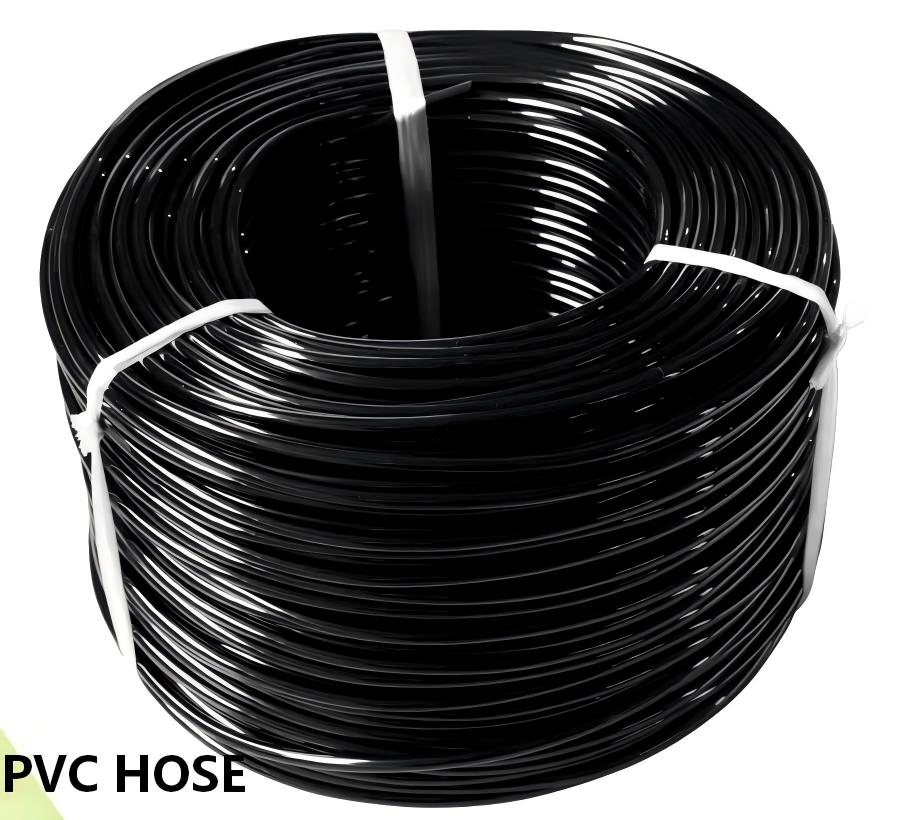
Flexible PVC is often the go-to for "spaghetti tubing" and micro-irrigation in greenhouses.
Bending Radius: PVC is significantly more supple than LDPE. It can navigate tight corners on hydroponic racks or benches without "kinking" (collapsing and cutting off flow).
Sealing Power: Because of its elasticity, Flexible PVC creates a superior, leak-proof seal around barbed fittings and emitters.
UV Resistance: High-quality greenhouse PVC is treated to withstand the high-intensity UV rays common in glass or polycarbonate structures.
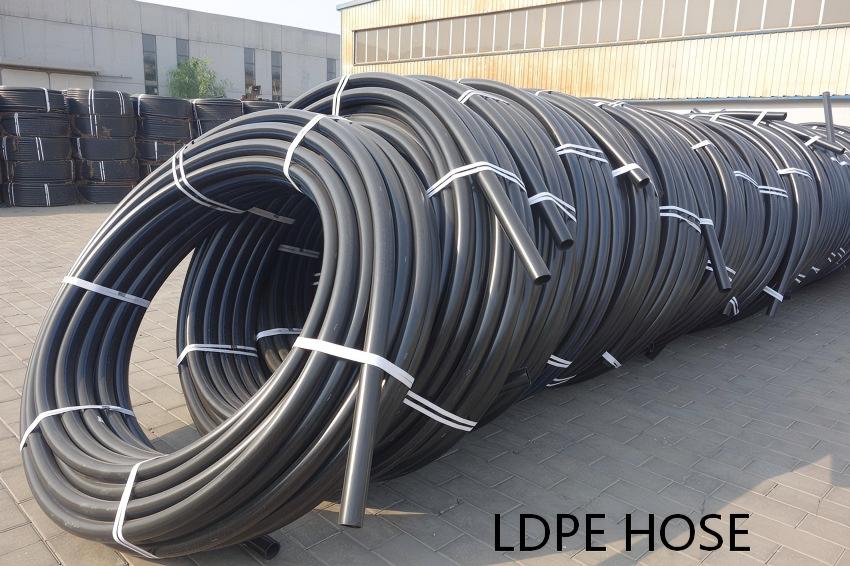
LDPE is the backbone of most large-scale greenhouse layouts.
Chemical Stability: Hydroponic nutrients can be corrosive. LDPE is chemically inert, meaning it won’t react with concentrated fertilizers or pH adjusters.
Anti-Algae (Opacity): Standard LDPE for irrigation is usually 100% opaque black. By blocking 100% of light, it prevents the photosynthesis of algae inside the tube—a critical requirement for preventing dripper clogs.
Cost Efficiency: For long-distance mainline runs within a large greenhouse, LDPE is significantly more cost-effective per meter than flexible PVC.
Feature | Flexible PVC Tubing | LDPE (Poly) Tubing |
Flexibility | Excellent (High Kink Resistance) | Moderate (Requires Elbow Fittings) |
Nutrient Compatibility | Good | Excellent (Chemically Inert) |
Connection Type | Barbed / Slip-on | Compression / Barbed |
Primary Use Case | Micro-drippers / Bench-top | Mainlines / Header Pipes |
Life Expectancy | 5 - 8 Years | 10 - 15 Years |
In 2026, global regulations for indoor farming are tightening. If you are growing leafy greens or herbs for export, ensure your tubing is Phthalate-Free (for PVC) or FDA-Compliant (for LDPE). This prevents harmful chemicals from leaching into the nutrient solution and, ultimately, the crop.
 English
 Español
 русский
 العربية